
Why Mobile Detailing Beats Car Washes for Luxury Vehicles
Quick answer
Automated car washes embed thousands of micro-scratches into clear coat with every cycle, use harsh chemicals that strip wax and sealant protection, and frequently damage trim, sensors, and aerodynamic components on luxury and exotic vehicles. Mobile detailing eliminates all four risks by hand-washing with pH-balanced products at your home — the only safe option for vehicles over $50,000.
By Al Alvarez
Owner & master detailer · 6+ years on Long Island
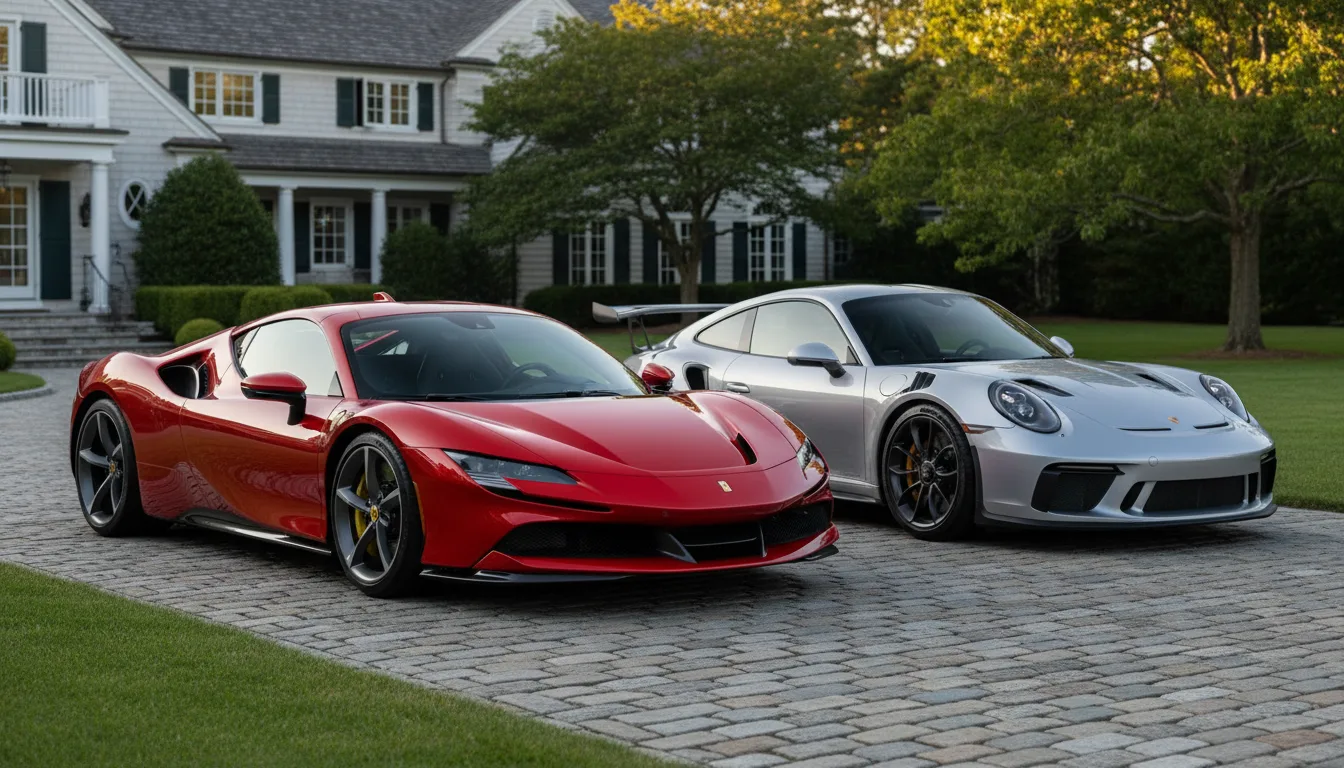
The math on luxury car washing changed about ten years ago. Two decades ago, when most luxury vehicles had thicker clear coat and fewer integrated electronics, a careful hand wash at a quality car-wash facility was an acceptable maintenance option. That’s no longer true. Modern luxury vehicles — Ferrari, Porsche, Range Rover, Bentley, McLaren, Tesla, and equivalents — have changed in three ways that make automated and quick-service washing actively harmful.
This is why mobile detailing has become the dominant maintenance model for luxury owners on Long Island, particularly in the Hamptons and on the North Shore where these vehicles concentrate.
What changed about modern luxury vehicles
Three relevant changes since 2010.
Thinner clear coat. Manufacturers have reduced clear coat thickness from 2.0-2.5 mils (early 2000s) to 1.4-1.8 mils on most modern luxury vehicles, driven by environmental regulations on solvent emissions during paint application. BMW, Audi, and Mercedes are particularly thin. This reduced margin makes any abrasive wash technique significantly more damaging than it would have been on older vehicles.
Sensor and camera proliferation. Modern luxury vehicles have 8-15 cameras and 10-20 sensors integrated into bumpers, mirrors, A-pillars, and around door handles. Pressure washers, automated tunnel brushes, and harsh chemicals can damage sensor housings, dislodge calibration, and force water into electrical connections. The cost of replacing or recalibrating these systems often exceeds $2,000 per incident.
Active aerodynamic components. Active rear spoilers, retractable mirrors, automatic running boards, and motorized antennas all interact poorly with car-wash equipment. Tunnel-wash brushes have torn off rear spoilers on Porsche 911 GT3s, dislodged retractable running boards on Range Rovers, and snapped antennas on Bentleys. None of these are warranty-covered when the cause is car-wash damage.
What automated washes actually do to clear coat
Tunnel car washes use either cloth/foam contact (older facilities) or “soft cloth” advertised systems (modern facilities). Independent testing by detailing industry researchers has documented significant clear-coat damage from both types.
Cloth contact washes embed an average of 1,200-2,500 individual micro-scratches per wash cycle on a luxury vehicle. The “swirl mark” pattern visible under direct sunlight on tunnel-washed vehicles is the cumulative effect of thousands of these micro-scratches over multiple visits. After 20-30 tunnel washes, the swirl pattern is visible under any lighting.
“Soft cloth” washes are improvements over older tunnel systems but still embed an average of 400-800 micro-scratches per cycle. The marketing claims these are gentle, but the cumulative effect over 20-30 visits is visible swirl pattern under any direct lighting.
Touchless washes avoid mechanical contact but use highly alkaline chemicals (pH 12-14) to dissolve dirt without contact. These chemicals strip wax and sealant protection in a single visit and degrade automotive trim, plastic, and rubber over repeated use.
What hand car washes get wrong
Better than automated, but still risky for luxury vehicles. The two most common failure modes:
Cross-contamination between vehicles. Most hand car washes use a small set of wash mitts and microfiber towels, rotating them across many vehicles per day. Grit picked up from one vehicle (a contractor’s pickup, an SUV with off-road dirt) ends up on the next vehicle (your Porsche). The result is the same swirl-mark embedding as automated washes, just less consistent.
Inconsistent technique. Hand car wash workers have widely varying training and time pressures. Two-bucket method, pH-correct shampoo, and proper drying technique require time that many quick-turn hand washes don’t allow. Quality varies dramatically from one visit to the next, and from one worker to the next.
A small number of premium hand car wash facilities — typically charging $80-150 per wash — operate at quality levels comparable to detailing. These exist but are rare on Long Island and require trust in the operator’s specific staff training.
What mobile detailing does differently
Three structural advantages that eliminate the risks above.
Single-vehicle dedicated equipment. Each vehicle gets fresh microfiber wash mitts, fresh wash water, and fresh drying towels. No cross-contamination from other vehicles is possible. Wash mitts are washed and dried in dedicated cycles between vehicles.
Two-bucket method, every wash. Wash bucket and rinse bucket separated, wash mitts rinsed in clean water before re-soaping. This is detailing 101, and it’s the difference between embedding micro-scratches and removing dirt without leaving any.
pH-balanced, paint-safe products. Koch-Chemie, Sonax, P&S, CarPro shampoos at pH 6-8 — the range that cleans effectively without stripping protection. None of the alkaline aggression of automated touchless systems.
The result on a luxury vehicle is paint that maintains its clarity over years of weekly service, rather than degrading visibly within 12-18 months of automated washing.
Specific luxury makes and their wash considerations
A few make-specific notes from our experience.
Ferrari and Lamborghini. Particularly soft single-stage paint on some older models (pre-2010 Ferraris with solid colors) is exceptionally easy to mar. Single-vehicle dedicated mitts and exotic-safe shampoos required.
Porsche. The PTS (Paint to Sample) program creates non-standard color formulations that may behave differently from production colors — extra care during clay bar work and polishing.
Range Rover. Long matte-trim accents (around windows, on grille) are easily damaged by acidic wheel cleaners and over-application of plastic dressings.
Tesla. EV-specific considerations: avoid water around door handle sensors, use distilled water for spot-free final rinses, never lift the vehicle on automated conveyor systems (battery clearance issues).
Bentley and Rolls-Royce. Hand-painted coachlines and pinstripes can be dissolved by aggressive solvents. Always identify these features before any decontamination work.
Cost comparison over time
Three-year cost comparison for a daily-driver luxury sedan:
Tunnel car wash, weekly ($25/wash): $1,300/year × 3 = $3,900. Plus body-shop polishing in year 3 to remove embedded swirl marks: $900+. Total: $4,800+. Result: visible clear-coat damage, reduced resale value.
Premium hand wash, bi-weekly ($60/wash): $1,560/year × 3 = $4,680. Variable quality, no protection between washes. Result: minor swirl accumulation, average clear coat condition.
Mobile detailing program (1× Full Detail spring + fall, Bi-Weekly Quick Detail subscription): ~$3,300/year × 3 = $9,900. Result: paint in showroom condition, hydrophobic sealant maintained, significantly increased resale value. Substantially more service than the tunnel-wash route — but it’s actually maintaining the vehicle, not damaging it.
The mobile program runs roughly 5% more than premium hand washing while delivering vastly better paint condition. Versus automated washing, mobile is more expensive per visit but produces a vehicle worth $3,000-5,000 more at trade-in or sale on a $80,000+ vehicle — easily recovering the cost premium.
Booking luxury vehicle service
Request a quote for service on your specific make and model. We have extensive experience with Ferrari, Porsche, McLaren, Lamborghini, Bentley, Rolls-Royce, Range Rover, Tesla, Aston Martin, and other luxury and exotic vehicles common across the Hamptons and North Shore. Service available across Long Island.