
Pollen, Pine Sap, and Tree Pitch: Spring Paint Damage on Long Island
Quick answer
Spring pollen and tree sap cause real, cumulative paint damage on Long Island cars — pollen is mildly acidic and embeds in the clear coat as it dries, and tree sap bonds chemically with the paint when it bakes in the sun. The fix is a proper decontamination wash followed by clay bar treatment, not the local tunnel wash. The prevention is a spray ceramic sealant that gives the contamination nothing to bond to. Done once in late April or May, a full detail plus the $75 ceramic upgrade resets the paint and protects it through the worst pollen and sap weeks of the year.
By Al Alvarez
Owner & master detailer · 6+ years on Long Island
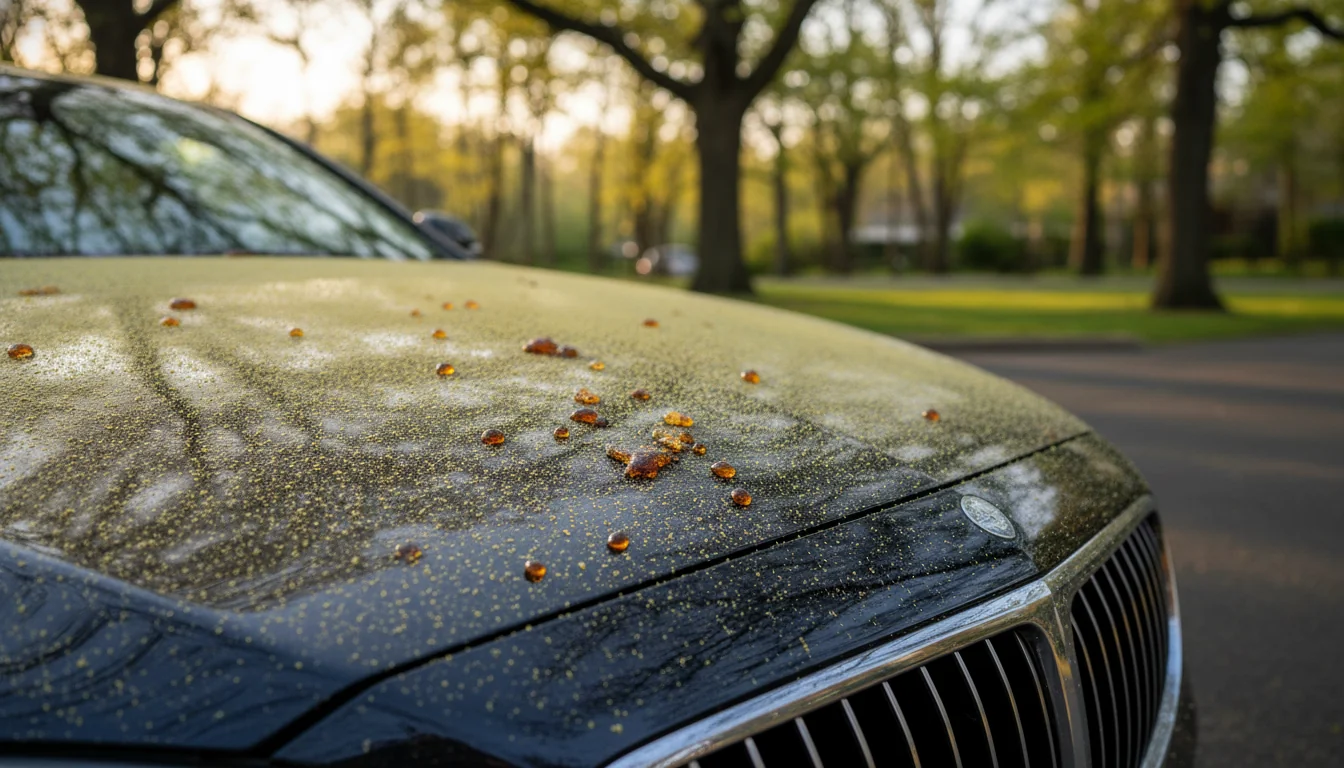
The first week of May, the cars in every Long Island driveway turn yellow-green. Two weeks later, the cars parked under pin oaks, maples, and pines pick up sap drops that turn into permanent spots if they’re left in the sun. By the time most owners get around to washing the car in June, the damage cycle has already started.
Pollen and tree sap are the spring versions of what road salt is in winter — slow, cumulative paint damage that doesn’t look like damage until it’s hard to reverse. This post is what’s actually happening at the paint level and the simple service that prevents it.
What pollen does to clear coat
Tree pollen — especially oak and pine pollen, which dominate Long Island in late April and May — is mildly acidic. The pollen grain itself is dry and inert. The damage starts when moisture activates it: morning dew, light rain, a humid overnight. The activated pollen sits on hot paint during the day and the acidic moisture etches microscopic pits into the clear coat.
A single season of letting pollen accumulate doesn’t ruin the car. The visible damage builds over years — cars on the East End that have lived under oaks for five or six summers without paint protection develop a hazy, dull finish in the horizontal panels (hood, roof, trunk lid) that won’t come back without polishing.
If you want a live signal of when this damage is peaking, the Pollen.com Long Island forecast tracks daily counts. Most of the damage on Long Island lands between late April and mid-June, with oak driving the peak weeks.
What tree sap does — and why it’s worse than pollen
Sap is a different problem. Pine sap, maple sap, and the sticky aphid honeydew that drops from a lot of suburban trees all bond chemically with clear coat when they bake in the sun. Cool, fresh sap wipes off with isopropyl alcohol. Sap that’s sat on a hot hood for a week is partially fused to the clear coat — removing it cleanly takes a chemical sap remover and patience, and what’s left underneath is often a small etched ring that requires polishing.
Tree pitch (the heavier, darker sap from conifers) is worst of all. It hardens, picks up dirt, and forms a black-brown dot that takes both chemical and mechanical work to remove.
The pattern that wrecks paint: sap drops in the morning, owner doesn’t notice, sun bakes it through the afternoon, repeats for a week. By the time the car gets washed, the sap has spot-welded to the clear coat at every drop site.
What removes pollen and sap safely
The right process, in order:
- Foam pre-soak. Loosens surface pollen and softens light sap before any contact with the paint. Skipping this and going straight to a wash mitt grinds pollen into the clear coat.
- Two-bucket hand wash. pH-balanced shampoo, separate wash and rinse buckets, lambswool or microfiber mitt. The same process behind our mobile detailing vs. car wash comparison — it matters more during pollen season because the abrasive risk is higher.
- Iron and contaminant decontamination. Spray-on iron remover strips embedded brake dust and metal particles that hold pollen on the surface.
- Clay bar. This is the step that actually pulls bonded pollen, sap residue, and pitch out of the clear coat. Run after washing, lubricated with a quick detailer, the clay bar drags microscopic contaminants off the paint. The paint feels glass-smooth after.
- Targeted sap removal. Any remaining sap or pitch dots get a dedicated remover and dwell time, then wiped with microfiber.
- Light polish if etching is visible. Where sap has already etched the clear coat, a finishing polish levels the surface. Heavy etching may need more aggressive cut.
- Seal it. This is where the protection comes in.
The $75 ceramic sealant is the prevention play
After the paint is decontaminated and clean, the spray ceramic sealant upgrade is what prevents the next pollen and sap cycle from doing the same damage. A standard hydrophobic sealant lasts 2-3 months — barely covers May through July. The spray ceramic sealant upgrade lasts 4-6 months and is significantly slicker, which matters because:
- Pollen rinses off instead of embedding. A garden hose rinse is enough to clear ceramic-protected paint between proper washes.
- Sap and pitch don’t bond as aggressively. Fresh drops wipe off with a quick detailer instead of needing chemical removers.
- Water dries spot-free. During pollen season, cars get rinsed and re-wetted constantly — sealed paint doesn’t pick up the mineral spots that unsealed paint does.
Paired with a full detail, the upgrade is $75 extra and covers the worst weeks of the year.
Timing on Long Island
The window that works for most owners:
- Late April to mid-May. Right after the worst of the pollen has dropped but before it sets in. Full detail + ceramic sealant. Resets the paint after winter and prepares it for the rest of the season.
- Mid-July (optional). Wash and re-seal touch-up for cars parked outside under trees daily.
- October. Fall service before winter — addresses what salt season is about to do. Covered in winter car care for Long Island.
Owners who skip the spring service end up booking the same scope as an emergency in late June after they notice the haze and the sap dots. Same cost, worse paint condition going in.
Areas where this matters most
Wherever there are old-growth trees overhead. Specifically heavy under pin oak and maple canopy in the older neighborhoods of Garden City, Manhasset, Roslyn, Cold Spring Harbor, Huntington, and the village sections of East Hampton and Southampton. Cars parked in open driveways in newer developments see less pollen and sap pressure but still pick up the airborne pollen that travels miles on the wind.
Booking
For a spring detail with the ceramic sealant upgrade across Nassau, Suffolk, the Hamptons, and the North Fork: text the car’s year/make/model and a photo of the paint condition to (631) 559-9235, or use the form at /contact. Mobile service — we come to you.